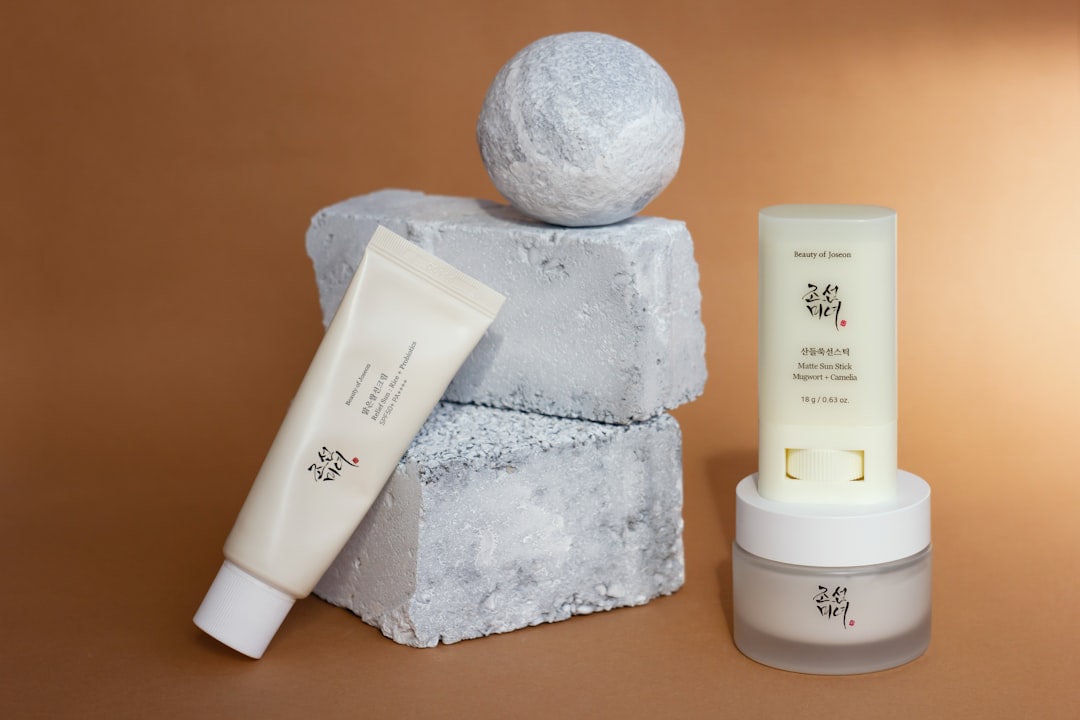
Picture this: it’s eight in the morning, you’ve just stepped out of the house in Bangsar or Subang Jaya, and you’re already sweating through your concealer. The sunscreen you applied half an hour ago? It feels greasy, looks shiny, and worst of all — your face has started to itch. For many K-beauty fans in Malaysia, this scenario is all too familiar. Which is exactly why, when Glowpick — Korea’s most trusted beauty review platform — announced its Q1 2026 award winners, the results weren’t just noteworthy for the Korean K-beauty community. They were deeply relevant for us here at home.
Across nearly every top category in the Glowpick Beauty Awards Q1 2026 for sun protection, one type of product swept the board: low-irritation mineral sunscreen, or in Korean, 저자극 무기자차 (jeoja-geuk mugi-jacha). This is no coincidence. It’s a clear cultural signal that Korean consumers — and by extension, the global K-beauty ecosystem — are making more deliberate, informed choices about what they put on their skin every single day.
Mineral vs. Chemical: What’s Actually the Difference?
Before we go further, let’s clear up a common misconception. Sunscreens broadly fall into two categories: chemical (organic) and mineral (inorganic). Chemical filters like oxybenzone and avobenzone work by absorbing UV rays and converting them into heat. Mineral sunscreens — formulated with zinc oxide and/or titanium dioxide — take a different approach entirely, physically reflecting UV radiation before it can penetrate the skin’s surface.
That distinction might sound technical, but the practical difference is very real. Chemical filters need to be absorbed into the skin to function, and it’s precisely this process that often triggers irritation in sensitive skin types — particularly those prone to rosacea, eczema, or simply reactive skin that flares up in the heat. Mineral sunscreens, by contrast, work at the skin’s surface. They don’t need to be absorbed, making them a far friendlier option for sensitive skin — and, increasingly, a more environmentally conscious choice, as younger Korean consumers factor in concerns like coral reef safety when making their purchases.
“저자극 무기자차” — these three Korean words, meaning low-irritation mineral sunscreen, have become K-beauty’s new benchmark for 2026, overtaking the chemical SPF products that dominated Olive Young shelves for years.
A New Wave Within the Korean K-Beauty Community
According to trends documented through the Glowpick Q1 2026 awards, this shift didn’t happen overnight. Over the past several years, Korean netizens on platforms like TheQoo and Pann Nate have increasingly shared accounts of redness, itching, and skin reactions linked to chemical sunscreens — particularly after prolonged, daily use. This groundswell of consumer feedback pushed major Korean brands to race back to the formulation drawing board, resulting in a new generation of mineral sunscreens that are dramatically lighter, virtually free of white cast, and genuinely suitable for everyday wear under makeup.
What’s particularly impressive is that the biggest innovation wasn’t simply swapping out active ingredients. The Glowpick 2026 winning brands invested heavily in advanced zinc oxide particle processing technology — achieving lighter, more wearable textures without compromising on UV protection. This directly addresses the long-standing complaint among Asian users that older mineral sunscreens felt heavy and left a noticeable white residue on medium to deeper skin tones.
The Real Test: Will It Hold Up in Malaysia?
This is the question that matters most for Malaysian readers. Korea and Malaysia are two very different climate realities. Seoul experiences four distinct seasons; Kuala Lumpur is hot and humid 365 days a year. Relative humidity in KL can hit 80 percent or above at midday, and with the heat index factored in, it regularly feels like 38 degrees Celsius. A sunscreen that performs beautifully through a Seoul summer is not automatically going to survive a 2pm walk through Chow Kit.
The good news, however, is this: the latest generation of Korean mineral sunscreen formulations — particularly those using nano-particle zinc oxide or encapsulated zinc oxide — demonstrate significantly better wear resistance under sweaty conditions than their predecessors. Unlike chemical sunscreens, which can degrade when they come into contact with acidic sweat, zinc oxide is chemically stable. It doesn’t react with the electrolytes in perspiration, which means the UV protection it delivers stays far more consistent — even if you’re drenched after rushing to catch the LRT.
One essential tip for the Malaysian climate: even with the best mineral sunscreen on the market, reapplication every two hours is non-negotiable if you’re spending time outdoors. This isn’t a product flaw — it’s a scientific requirement that applies equally to every type of sunscreen. Many Malaysian skincare enthusiasts are now turning to mineral sunscreen sticks for quick touch-ups over makeup, a habit that’s rapidly gaining traction in local skincare communities.
Getting Your Hands on It in Malaysia: From Olive Young to Lazada
Good news for K-beauty fans in Malaysia: the distribution ecosystem for Korean products here has matured considerably. Olive Young, Korea’s dominant health and beauty retailer, has hosted several pop-ups in Kuala Lumpur — including at Pavilion KL and Sunway Pyramid — giving local shoppers the chance to try products before buying. While their physical presence remains periodic, Olive Young’s official Lazada Malaysia storefront now carries authentic products with nationwide delivery.
Beyond that, authorised K-beauty sellers on Shopee Malaysia — particularly those operating out of Ampang and Petaling Jaya — regularly bring in fresh stock from Korea within two to three weeks of a product’s local launch. For the Glowpick award-winning products that are generating buzz right now, expect to pay somewhere between RM45 and RM120 depending on size and brand. It’s worth comparing prices across platforms, as the same product can vary by as much as 20 to 30 percent between listings.
One important note for Muslim consumers in Malaysia: most Korean mineral sunscreens do not carry official halal certification, but the primary active ingredients — zinc oxide and titanium dioxide — are naturally occurring minerals with no animal-derived origins. For those who prefer to be thorough, it’s worth checking the full ingredient list for any added emollients or fragrances that may be derived from bovine or porcine sources. Brands like Purito and isntree have consistently maintained fragrance-free, minimal-irritant formulations and are transparent about their ingredient lists, making it considerably easier to verify what you’re applying to your skin.
More Than a Trend — A Shift in Mindset
Mineral sunscreen’s sweep at Glowpick 2026 reflects something larger than a passing beauty trend. It mirrors a broader shift in how Korean consumers — and increasingly, Asian consumers at large — are approaching skincare: with more scientific rigour, more caution, and a greater focus on long-term skin health over instant aesthetic results. For Malaysian consumers who are increasingly making purchasing decisions based on ingredient research and community reviews, this shift presents a genuine opportunity to upgrade your sun protection routine with choices that are smarter, safer, and — thanks to Korean innovation — now far more comfortable to wear every day under the relentless tropical sun.