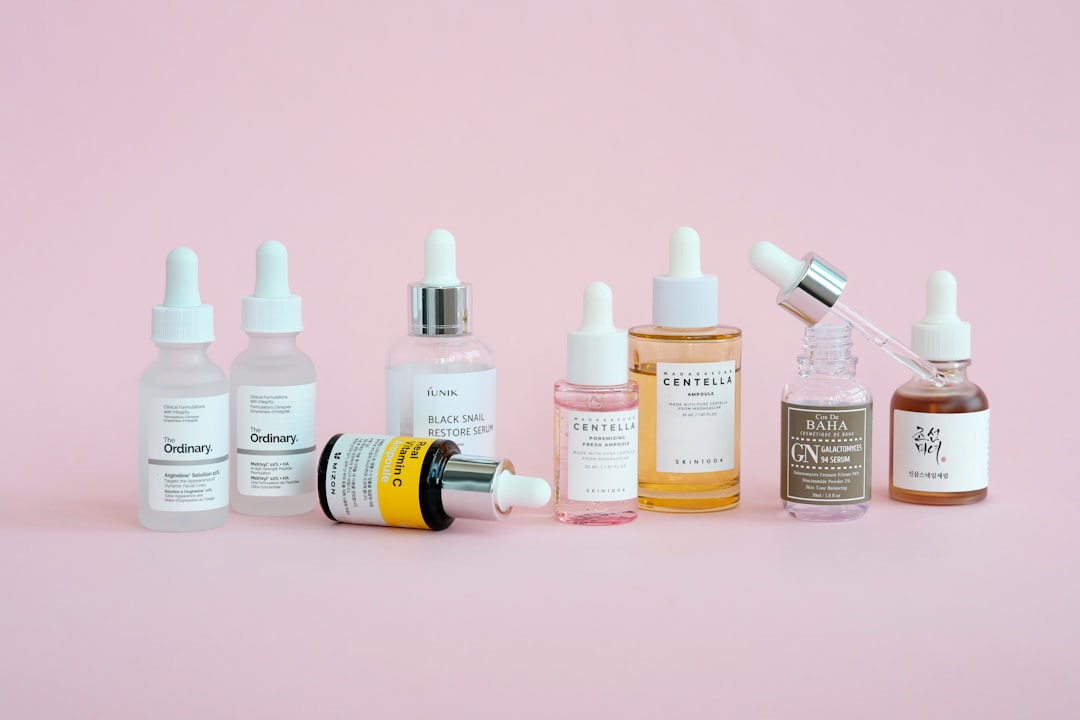
Every Malaysian K-beauty fan has had that moment — mid-episode of some Korean drama, pausing to wonder how these actors manage to look so impossibly fresh, so flawlessly smooth, as though time has simply decided to leave their skin alone. The answer, it turns out, goes well beyond a solid sunscreen routine and a stash of sheet masks. Behind the luminous skin of Korean women lies an extraordinarily sophisticated aesthetics industry — and in 2026, its biggest secret has finally made its way to the global market in a form you can apply yourself, at home, without a single needle in sight.
Meet PDRN. It’s not a new serum brand, nor another vitamin complex you’d spot on a pharmacy shelf. PDRN — short for Polydeoxyribonucleotide — is an active ingredient extracted from salmon DNA, and it’s fundamentally changing how the world understands skincare. According to a report by Joy Sauce, searches for PDRN surged by a staggering 998% within the K-beauty ecosystem this year alone, making it the most talked-about ingredient in Korean beauty right now.
From the Operating Table to Your Bathroom Shelf
What makes PDRN genuinely compelling isn’t just its unusual origin — it’s the long clinical track record behind it. This isn’t an ingredient that was invented to ride a beauty trend. PDRN has been used in Korean regenerative medicine for decades, most notably in wound recovery, joint treatments, and post-surgical therapy. In Gangnam’s renowned aesthetic clinics, PDRN injections — commonly known as “salmon DNA injections” — have long been a go-to for Korean women seeking serious skin restoration without the intensity of more invasive procedures.
Here’s how it works: salmon DNA has a surprisingly high biological compatibility with human DNA. When PDRN is absorbed into the skin, it acts as a rebuilding agent — stimulating collagen production, accelerating the repair of damaged cells, and boosting moisture from within. It doesn’t simply “fill in” wrinkles the way a filler would. Instead, it essentially re-educates the skin to behave like younger skin.
“PDRN doesn’t hide the signs of ageing — it reverses the process that created them.”
Why 2026 Is PDRN’s Moment
So why now? PDRN has existed in the medical world for decades. The leap from a doctor’s treatment room to a daily skincare routine requires two very specific conditions: sophisticated delivery technology capable of carrying the active ingredient effectively into the skin, and a wave of consumers educated enough to understand and trust the science behind it.
Both conditions came together in 2025 and 2026. Leading K-beauty brands managed to successfully formulate PDRN into stable watery serums, ampoules, and hydrogel patches — no small technical feat, given how sensitive this ingredient is to temperature and storage conditions. Simultaneously, the global skincare community, growing rapidly across TikTok, Reddit skincare threads, and beauty forums, has been increasingly hungry for ingredients with real clinical credentials rather than just viral hype.
What the Science Actually Says — and What to Expect
It’s worth being upfront about this: topical PDRN — the kind you apply to your skin — is not the same as PDRN injected directly into the dermis. The strongest clinical studies do refer to the injectable form. That said, well-formulated topical versions, particularly those combining PDRN with penetration-enhancing technologies like liposomes or nanoparticles, have shown meaningful results — especially in reducing redness, improving skin texture, and boosting elasticity.
This means a PDRN serum in your daily routine isn’t a replacement for a clinical procedure, but it is a significant step forward compared to conventional ingredients like hyaluronic acid or standard peptides. For those dealing with sensitive skin, post-acne redness (post-inflammatory hyperpigmentation), or early signs of ageing, PDRN offers an approach that manages to be both scientifically rigorous and surprisingly gentle.
The Halal Question: What Muslim Consumers in Malaysia Should Know
For Muslim consumers in Malaysia, this is a perfectly reasonable — and important — question to ask: what is the halal status of an ingredient derived from salmon? The good news is that salmon is a scaled aquatic animal, which is broadly accepted as halal in Islam — placing it in an entirely different category from porcine- or alcohol-based ingredients that warrant closer scrutiny. That said, as with any skincare product you’re considering, it’s always wise to check whether the brand carries halal certification, or at the very least, whether they offer transparent ingredient sourcing information.
Several K-beauty brands now offering PDRN formulations have started publishing detailed sourcing information on their official websites — in part as a direct response to growing demand from Southeast Asian markets. Before purchasing, it’s worth checking the brand’s website or reaching out to local distributors for a full ingredient list. In Malaysia, larger K-beauty distributors on Shopee Mall, Lazada, or at dedicated K-beauty counters in Sunway Pyramid and Mid Valley are generally well-equipped to help with these queries.
Finding PDRN in Malaysia: A Practical Guide
PDRN hasn’t quite made it to mainstream pharmacy shelves in Malaysia yet — we’re still in the early adopter phase. But for those who want to be ahead of the curve, it’s already accessible through several channels. Specialist K-beauty sellers on local e-commerce platforms are already listing PDRN products from brands like Medicube, Some By Mi, and a handful of more specialist Korean dermatology labels. A good PDRN serum will generally set you back somewhere between RM120 to RM350, depending on the concentration and brand.
For Malaysian K-beauty enthusiasts who travel to Seoul regularly or shop through friends in Korea, this is absolutely the time to add PDRN to your list. In Myeongdong and at Olive Young stores, these products are already claiming increasingly prominent shelf space. For those wanting to go a step further, aesthetic clinics in Kuala Lumpur have also begun offering PDRN as a treatment option — though the cost and results of clinical procedures differ considerably from their topical counterparts.
K-beauty has a habit of introducing us to ingredients that sound peculiar at first, only to completely reshape how we care for our skin — just think about how snail mucin and centella asiatica were received when they first arrived. PDRN may not have the catchiest name, but it brings something far more valuable than good branding: solid science, a genuine clinical history, and a straightforward promise — skin that doesn’t just look healthy, but is actively in the process of healing itself.