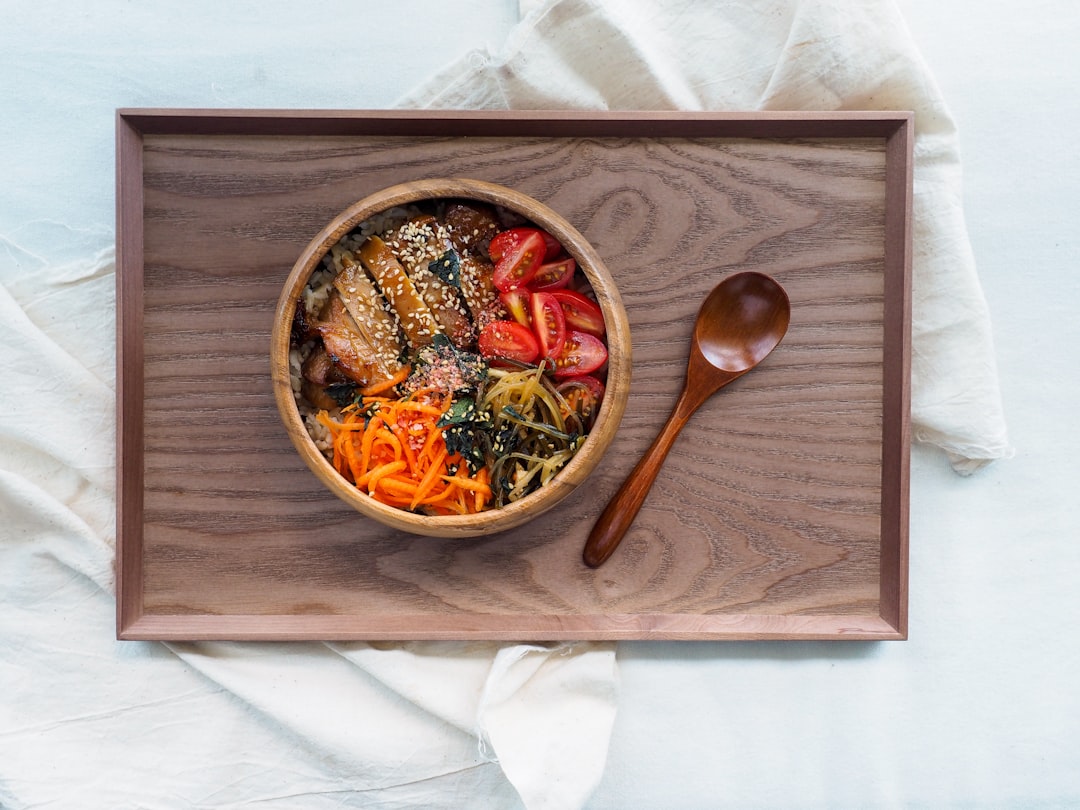
Picture this: a quiet corner table at a café in Bangsar, a small bowl of brown rice arranged with quiet precision — thin slices of cucumber, a soft-boiled egg with a yolk that yields just so, a scatter of sesame seeds and finely cut spring onions — and a still-steaming cup of barley tea on the side. No friend to catch up with. No meeting to rush back to. Just you, your meal, and a stillness that feels like the most expensive luxury this city has to offer.
In Korea, a scene like this is no longer met with pity or awkward glances. It has become a full-blown lifestyle — photographed, celebrated, and aspirational across social media. The name: 혼웰식, romanised as hon-wel-shik, a compound word that fuses hon (혼, meaning alone), wel drawn from wellness, and shik (식, meaning food or meal). It is, according to industry watchers, set to be Korea’s defining food trend of 2026.
More Than Just Eating Alone
Solo dining culture — known in Korea as honbap — is nothing new. It took root more than a decade ago as single-person households began surging in cities like Seoul and Busan, and it has long been a staple of Korean TV and YouTube content. But hon-wel-shik takes the concept somewhere deeper and more intentional.
According to trend analysis from digital agency Nasmedia, hon-wel-shik isn’t simply about eating without company — it’s about how you eat. A hon-wel-shik meal is considered and composed: a single portion that is nutritionally complete, low in sugar, mindful of calories, and — here is the part that catches everyone’s eye — plated with an aesthetic care that makes you want to pause before picking up your chopsticks. It is wellness culture colliding with visual culture, and the result is a food phenomenon that goes well beyond appetite.
Hon-wel-shik isn’t about eating alone because you have to — it’s about choosing to be fully present with your meal, without distraction, without compromise.
Aesthetics With Substance
What separates hon-wel-shik from simply making your lunch look good for Instagram is the philosophy behind it. In the hon-wel-shik world, beautiful plating is not about showing off — it is an act of self-respect. Much like the Japanese concept of ichiju sansai (one soup, three sides), which prizes balance and beauty in everyday eating, hon-wel-shik brings a similar sensibility to the rhythms of modern urban Korean life.
The meals that fall under this category typically draw inspiration from traditional Korean cooking — bibimbap in a stone bowl, neatly rolled gimbap, a slow-simmered doenjang jjigae — but reimagined for one, with measured ingredients and a presentation that would not look out of place in a fine dining setting. Meal prep is woven into the culture too: cooking in bulk over the weekend, storing portions in glass containers, and moving through the week with a sense of quiet intention at every meal.
Why This Trend Hits Close to Home in Malaysia
Do not be too quick to file this away as a purely Korean phenomenon. Look around. In the Klang Valley, the number of people living alone — particularly young professionals between 25 and 35 — is climbing steadily. The proliferation of studio condominiums in areas like Mont Kiara, Chow Kit, and Puchong is hard evidence of a quiet but significant social shift. Many of us eat lunch alone at our desks, order delivery to an empty apartment, or sit by ourselves at a café with nothing but a screen for company.
The difference is that we have never really framed any of that as a positive experience. Hon-wel-shik gives us both the language and the framework to do exactly that. It tells us that eating alone can — and arguably should — be a ritual we plan, savour, and take pride in. For the many Malaysian professional women, whether Malay, Chinese, Indian, or otherwise, who are living independently in Kuala Lumpur, this philosophy has the potential to transform mealtimes from mere routine into something genuinely meaningful.
Bringing Hon-Wel-Shik to a Malaysian Kitchen
The good news is that the core elements of hon-wel-shik translate surprisingly well into the Malaysian context, halal requirements included. Many foundational hon-wel-shik recipes are inherently free of problematic ingredients — brown rice with steamed vegetables, pan-fried or baked tofu, eggs prepared any number of ways, and gochujang-based sauces (available in halal-certified versions at Korean grocery stores like H-Mart at Mid Valley or Korean specialty shops in Ampang). For those who enjoy a more local spin, a Malaysian hon-wel-shik bowl might feature steamed kurau fish over red rice, a small ramekin of sambal belacan on the side, and a colourful arrangement of cucumber slices and cherry tomatoes.
What matters most in the spirit of hon-wel-shik is not the Korean cuisine itself, but the principle it carries: choose ingredients that serve your body well, take a few extra minutes to arrange them with care, and then sit down — phone face-down, notifications on mute — and eat with full attention. In an age of endless pings and video calls that encroach on lunchtime, this is perhaps the gentlest, most delicious form of rebellion available to us.
A Movement, Not Just a Moment
There is something larger at work beneath the rise of hon-wel-shik. It is a generational response to exhaustion — exhaustion with fast food culture, with choices made out of necessity rather than preference, and with the lingering social stigma that eating alone is something to be embarrassed about or hidden away. Korean netizens discussing hon-wel-shik on platforms like TheQoo and Instagram are not simply sharing food photos. They are actively redefining what it means to take care of yourself.
For theKoreaBuzz readers in Malaysia, this trend is an invitation to rethink our own relationship with mealtimes. Not all of us will rush out to buy Korean ceramic bowls or start arranging crudités with kitchen tweezers. But the idea that eating alone can be a genuine act of self-respect — that you deserve a nourishing, beautifully presented meal even when no one else is watching — is something worth carrying back to our own tables, wherever they may be.